
Standard — most new WI construction
Fox Valley, Madison, Milwaukee — holds water for days
Clay soil premium: WI clay drains slowly, adding 10–20% to interior drainage installs and increasing excavation difficulty for exterior work.
This estimate assumes WI freeze-thaw conditions. All drainage systems should use freeze-rated drainage tile.
Compare quotes from Wisconsin waterproofing pros — no obligation
Based on 2024–2025 Wisconsin market data. Get 3+ written quotes for accurate pricing.
Interior vs. Exterior Waterproofing: Which Do You Need?
- Manages water that enters — doesn't stop it at the source
- Less disruptive — no full excavation of landscaping
- $4,000–$12,000 — works for most WI seepage issues
- Requires sump pump — battery backup essential in WI
Best for: wall seepage, floor cracks, most Wisconsin homes with clay soil issues
- Stops water at the source — waterproof membrane on exterior wall
- Full excavation required — disrupts landscaping, driveway, plantings
- $8,000–$25,000+ — best for new cracks / block foundations
- Typically done in spring/fall — not mid-winter
Best for: severe wall bowing, new structural cracks, homes with repeated exterior drainage failure
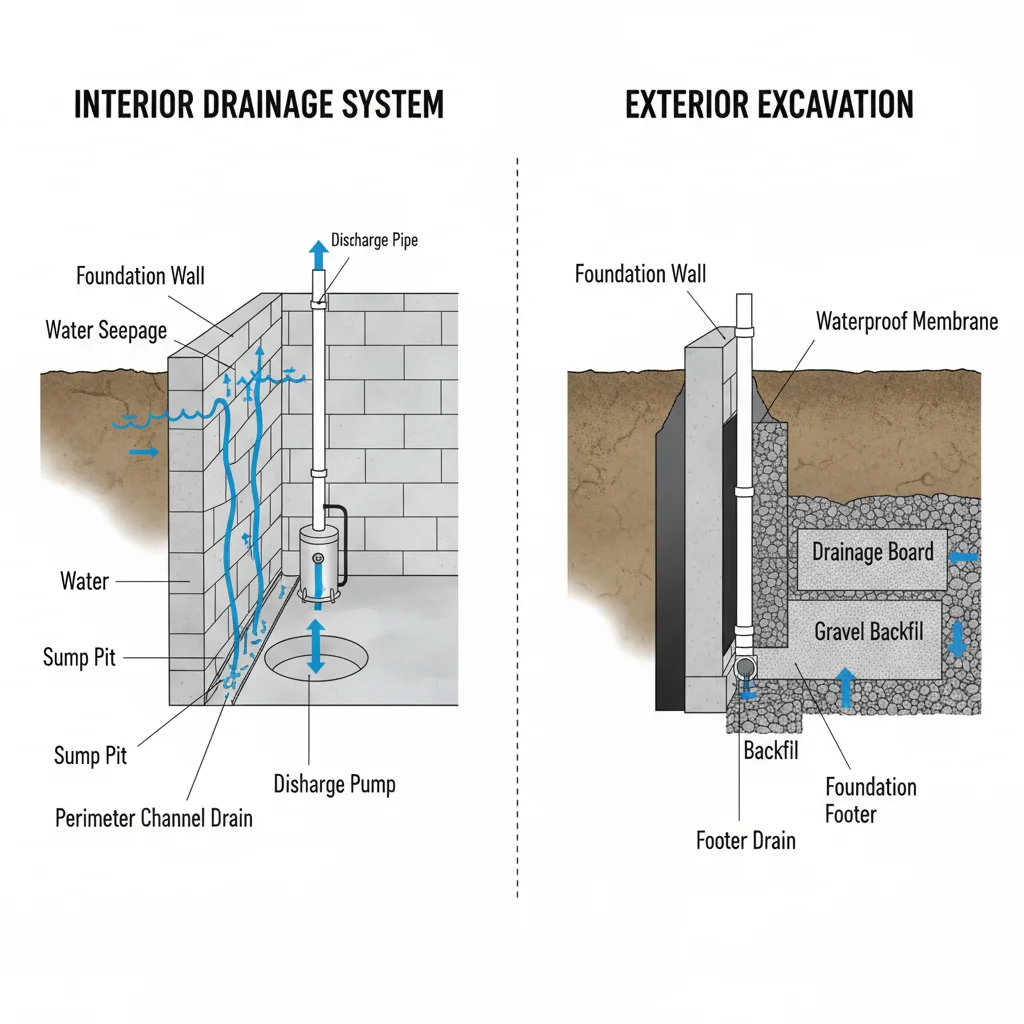
Not sure which approach you need? Read our interior waterproofing service guide or browse Wisconsin contractors who can assess your specific situation.
Why Wisconsin Clay Soil Makes Waterproofing Harder
Clay soil doesn't drain — it holds water against your foundation like a sponge. After heavy rain or spring snowmelt, WI clay soil stays saturated for days, maintaining constant hydrostatic pressure against basement walls. This is why Wisconsin basements leak long after the rain stops.
Sandy soil drains quickly; clay soil doesn't. If you're in the Fox Valley, Madison, or Milwaukee areas, assume clay. This adds 10–20% to interior drainage installs (slower digging, heavier debris) and significantly increases excavation costs for exterior work.
Sump Pump: The Unsung Hero of WI Basements
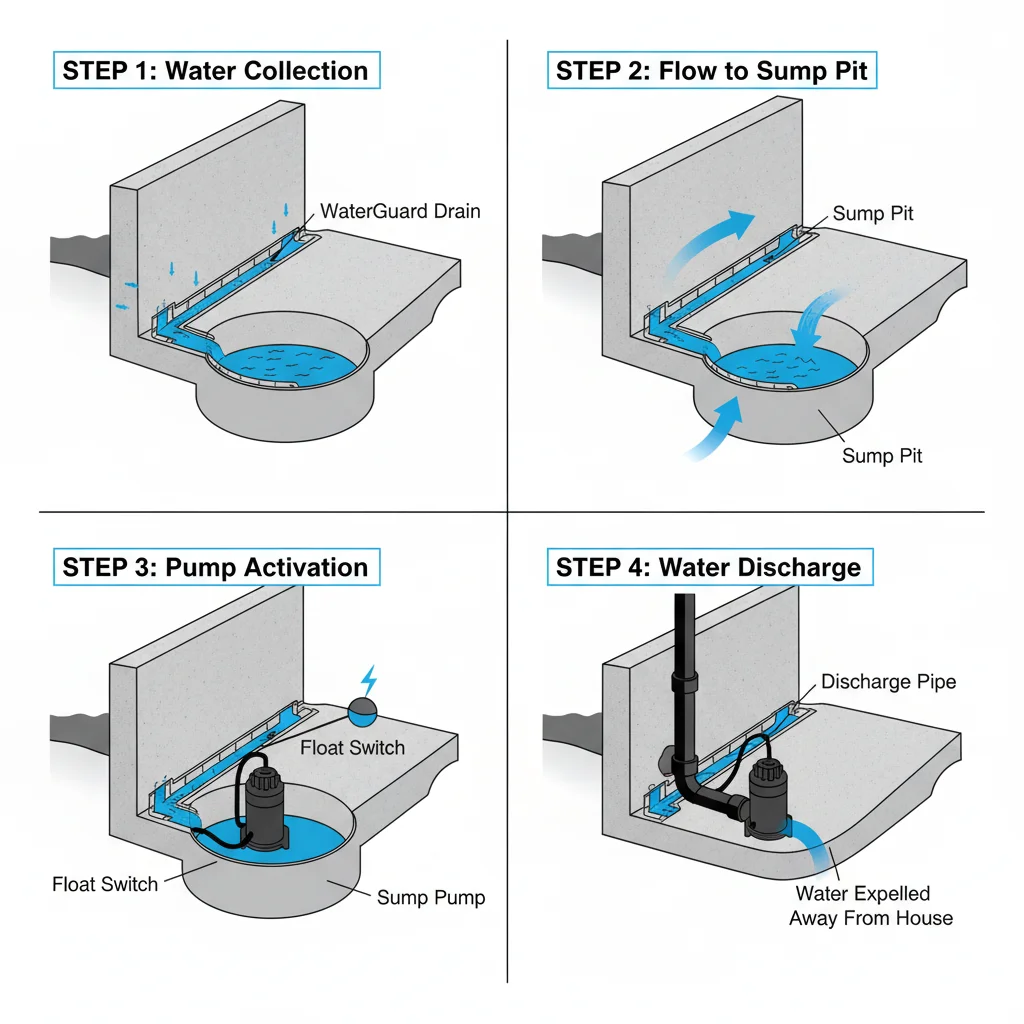
Perimeter drain collects water
WaterGuard or French drain channels seepage from walls and floor joints
Water flows to sump pit
Gravity-fed channel directs water to the collection pit in the basement floor
Pump activates when pit fills
Float switch triggers the pump automatically — no manual intervention needed
Discharged 10ft+ from foundation
Water expelled away from the house; proper grading keeps it from returning
Power outages happen during the same severe storms that flood basements. A battery backup sump pump ($300–$600 installed) keeps water pumping when the grid goes down — exactly when you need it most. Don't install a drainage system without one.
What a Legitimate WI Waterproofing Quote Looks Like
A legitimate warranty transfers to future homeowners — it's a selling point, not just protection for you.
Ask for their WI contractor license number. Verify at the DSPS website. No license = no hire.
Named brands (WaterGuard, ThermalDry, etc.) allow you to compare quotes apples-to-apples. Generic 'perimeter drain' quotes are vague.
The quote should name the sump pump model, horsepower, and backup system. Battery backup should be included or itemized.
A crack injection quote for a bowing wall is a red flag. The quote should match your actual problem diagnosis.
Ready to get quotes? Browse Wisconsin waterproofing contractors →
Need a Pro, Not a Calculator?
Browse Wisconsin waterproofing contractors. Free estimates, no obligation.
Find Contractors